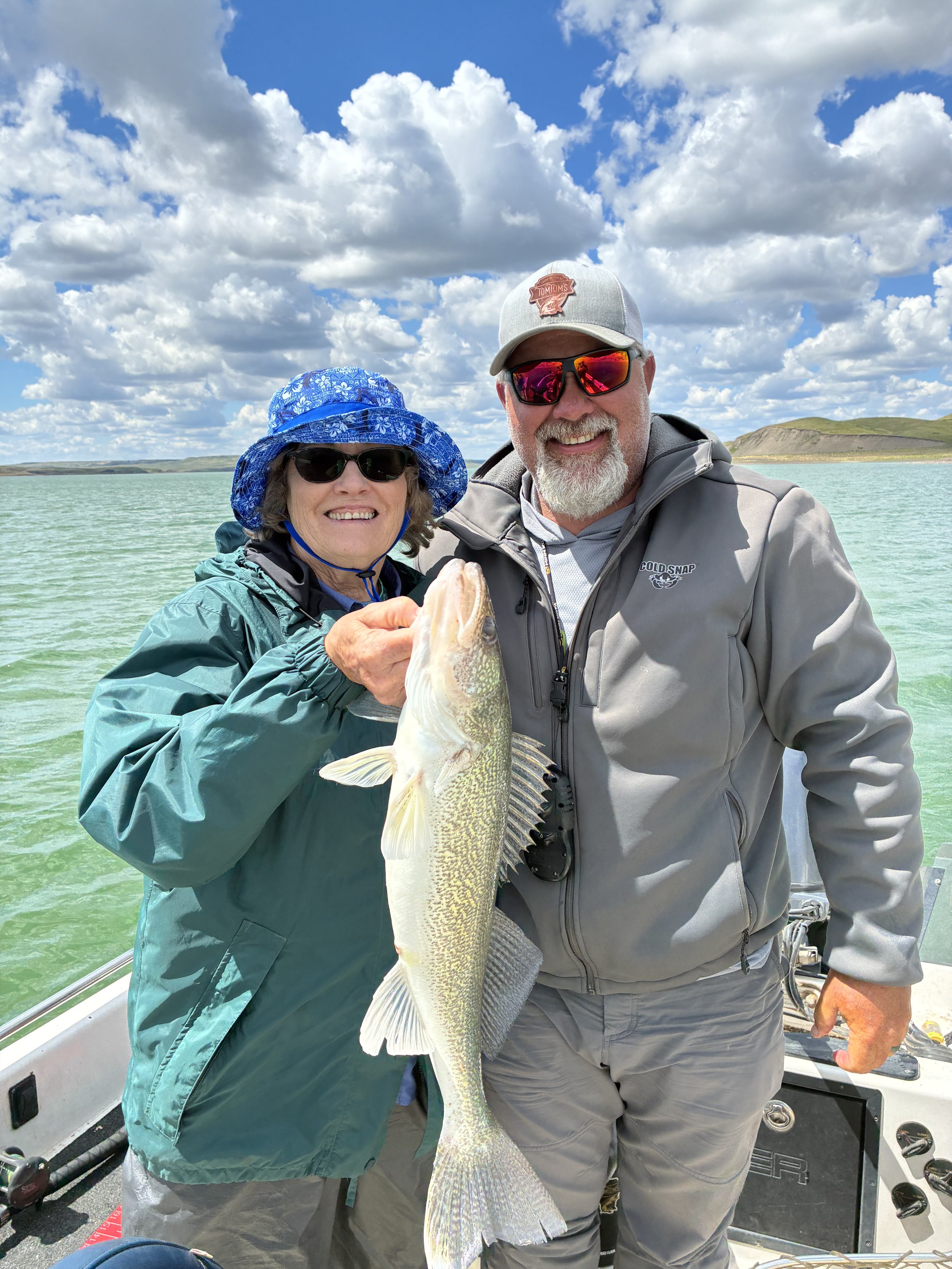
First Impressions of Lake Oahe in 2026
First Impressions of Lake Oahe in 2026: Following the Bait
When I first arrived at Lake Oahe this year, one thing became obvious almost immediately. The walleyes were not staging in many of the traditional locations where anglers have found them in years past.
As I spent more time on the water and behind my electronics, the reason began to reveal itself. Massive schools of baitfish, which appeared to be primarily herring and smelt, were scattered throughout the system. Using forward facing sonar, I regularly observed large bait clouds suspended over structure in depths ranging from 22 to nearly 40 feet.
What really caught my attention was what was happening around those bait schools. Large predator fish, including walleyes, northern pike, and even salmon, were actively feeding within and around these bait balls. It quickly became clear that any successful pattern I developed would need to revolve around locating bait first and targeting the fish feeding around it.
Once we began identifying these bait concentrations, our trolling program started to come together. We primarily pulled Bandit crankbaits on lead core, running two lines approximately 90 feet back and two lines around 124 feet back. This allowed us to cover both the upper portion of the bait schools and the lower edge where larger fish often positioned themselves.
The deeper presentations proved important, but there was a limit. If we pushed much deeper than 124 feet of lead core, catches shifted dramatically toward species such as goldeye and catfish. That told us something valuable. The larger predator fish were feeding within and above the bait schools, while many of the rough fish appeared to be holding below them, likely cleaning up scraps from the feeding activity above.
That doesn’t mean bottom bouncers stopped producing fish. Several anglers continued to catch walleyes dragging live bait rigs. However, many of those bites seemed to occur during narrower feeding windows and often came from fish positioned on adjacent flats or secondary breaks near the bait. My observation was that many of the smaller walleyes would slide out to feed and then return to nearby structure.
The bigger fish behaved differently. Time and time again, the better quality walleyes stayed associated with the bait itself. They often appeared as high suspended marks near or within the bait schools and were constantly roaming in deeper water. Rather than relating tightly to structure, they were relating to food.
For me, that was the biggest lesson from Lake Oahe this year. If you found the bait, you found the predators. The traditional structure still mattered, but the forage base was driving the pattern. Understanding that relationship between bait and predator fish was the key to putting together consistent catches throughout my time on the lake.